
Month: April 2011

Economic News

Unemployment Rates Falling In Most Metro Areas.

The AP (4/7, Rugaber) reports, “Unemployment rates are falling in most metro areas across the country, suggesting that recent nationwide gains in hiring are widespread and not limited to a few healthy regions.” According to the Labor Department, “more than three-quarters of the nation’s 372 largest metro areas reported lower unemployment rates in February than the previous month,” while “more than 300 areas added jobs in February compared to the previous month.” Moody’s economist Marisa DiNatale said the rise in employment opportunity is “definitely becoming a lot more broad-based.”

UK Manufacturing Growth Unexpectedly Stalls.

Bloomberg News (4/7, Ryan) reports, “UK manufacturing growth unexpectedly stalled in February as declining production of goods from chemicals to plastics dented the industrial recovery.” This is according to a report from the Office for National Statistics, the text of which “casts doubt on the strength of the economy’s rebound from a contraction in the fourth quarter at a time when higher raw-material costs threaten to squeeze manufacturers’ margins,” according to the article. “We’ve been skeptical that the recovery in manufacturing can continue at the pace it has been,” one analyst said, adding, “It will still have a good year. This outturn probably reflects monthly volatility.”

The AP (4/7) reports, “British industrial production fell 1.2 percent in February from January, an official report said Wednesday, marking the largest monthly fall since August 2009 and far worse than analyst expectations for an increase of 0.2 percent. The Office for National Statistics said a 7.8 percent drop in oil and gas extraction was the main reason for the fall, while the manufacturing sector was flat.”

The Financial Times (4/6, Pimlott, Subscription Publication) quotes Simon Kirby of the National Institute of Economic and Social Research, who said, “We had the opening salvo of a VAT rise [in January] and that’s it so far, and inflation is likely to dampen spending from now on.” Kirby added, “That’s why the figures are worrying, because of what the recovery will look like for the rest of the year.”

German Factory Orders Skyrocketing.

Bloomberg News (4/7, Black) reports, “German factory orders rose almost five times as much as economists forecast in February, indicating growth in Europe’s largest economy gathered pace in the first quarter.” The German Economy Ministry said that “orders, adjusted for seasonal swings and inflation, gained 2.4 percent from January, when they jumped 3.1 percent.” Experts had predicted a gain of 0.5 percent. “With German companies stepping up investment and hiring to meet booming export orders, the European Central Bank is poised to raise interest rates tomorrow to keep a lid on inflation.” Economist Klaus Baader said, “This points to continued strong growth momentum in manufacturing output for the next several months.”

From SME Daily Executive Briefing 4/7/2011
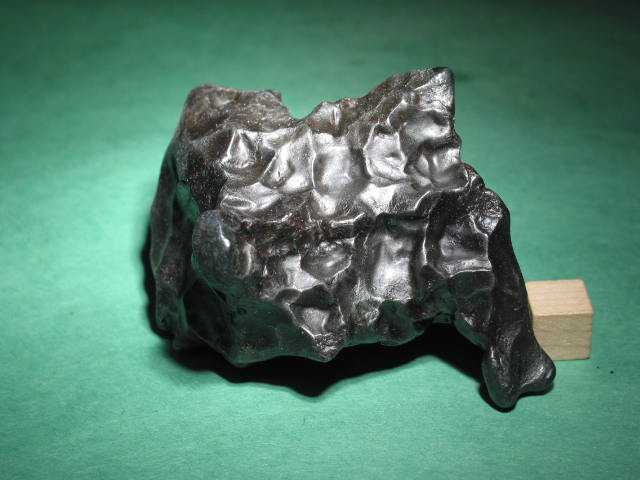
Iron: “Metal of Heaven”

Iron is the most-used metal on this planet. It is also the most common element on this planet. It forms much of the earth’s inner and outer core as well as its crust. Iron is a prevalent and necessary element for life on this planet, including human life. Ironically (no pun intended by use of this word), iron deficiency is the most common nutritional deficiency known to humans. Iron deficiencies can cause anemia, slowed motor and mental function, slow physical growth and development in children, and premature births in pregnant mothers.

The prevalence of iron is not limited to Planet Earth. It is, in fact, the sixth most abundant element in the entire universe. Don’t ask me how they figured that out; but according to the Powers That Be, this is a scientifically proven fact.

The earliest archaeological evidence of man-made iron items go back over 6000 years. Iron tools and beaded jewelry daring back to 4000 BC have been found in the tombs of ancient Egyptians. Iron was also a preferred choice of metal for ancient weaponry.

Most interestingly, the first source of iron did not come from this planet. It came from outer space.

That’s right: it’s called meteoric iron. In fact, in spite of the abundance of iron on this planet, humans first worked meteoric iron before they ever realized that an abundance of more “locally grown” supplies was also available. In fact, because they observed the meteorites falling from the sky, the Egyptian name for iron is ba-na-pe, meaning “metal of heaven”.

Iron comes to our planet from the heavens in the form of highly recognizable meteorites. Iron meteorites are thought to be the fragments of the cores of larger ancient asteroids that have been shattered by impacts. Because iron meteorites are very distinctive and easy to recognize, they can be readily identified even if they are not a hugely abundant item on this planet. It would take humans quite a few more years before they realized that the same element which came down from the heavens already existed in significant, if less easily identifiable quantities all over Planet Earth.

The fact that the first iron used by humans came from the sky is accurately reflected in a number of well-known myths and legends. Probably the most famous of all is the tale of Excalibur’s brother sword, Clarent – more commonly known as the Sword in the Stone. According to this legend, a meteor, in the shape of a red dragon’s head, fell to earth, conveniently landing at the precise moment when Uther, Arthur’s father, was given command of an army after its last commander had fallen. A red dragon’s head also happens to be the symbol of Briton, which may help to explain why witnesses present thought it looked a lot like a dragon’s head. The meteor’s appearance was taken by Merlin as a sign that Uther’s destiny was to become King of All the Britons. Merlin had the meteoric metal forged into Clarent, the magic Sword in the Stone, and gave Uther the surname Pendragon, which is Welsh for “dragon’s head”.

Let’s not forget about Zeus’ thunderbolt, which was made by our good old friend Hephaestus (see last week’s blog article, “Hephaestus: the original Man of Steel”). Hephaestus made everything out of iron, including Zeus’ super-powered thunderbolt. Considering that Zeus’ power was attributed to come directly from the Heavens, meteoric iron would be the most fitting material for the earthly symbol of his power.

In the sense that our entire way of life would be threatened if not destroyed if we didn’t have iron, this humble and abundant metal really should be viewed as the most precious of all on this planet. And – who knows – based on its abundance throughout the known universe, maybe there’s some other intergalactic blogger out there who’s writing the same thing right now.

-Anja Wulf