Month: March 2011

Survey Finds Higher Optimism In Manufacturing, Service Sectors.


CNBC (3/28, Gewirtz) reported, “In another sign the American economy is on the comeback trail, a new survey from KPMG shows optimism is improving among US manufacturing and service industry executives.” The survey found that “68 percent of manufacturing executives believe business activity will be higher in the next 12 months,” a gain of 11 percent from October of last year. And “41 percent of those same executives say they plan to hire more in the weeks and months ahead,” up from 28 percent in the same time period.

The Ecommerce Journal (3/29) reports, “In terms of revenue 65% of manufacturers surveyed by KPMG expect revenues to rise in the next year. ‘American manufacturing is on the rise because companies are rebalancing, and it is pretty clear demand is picking up nationwide,’ said Lynne Doughtie, KPMG’s National Managing Partner for Advisory Services.”

Manufacturing Economic Activity At Highest Level Since 2004. The Boston Business Journal (3/28) reported in its “BBJ Morning Buzz” blog, “The manufacturing sector singularly contracted over the past several decades,” a contraction that was hastened by the recession. But now “a number of area manufacturing firms are sporting some new faces on their floors as the sector undergoes something of a recovery.” According to a recent article in the Sun Chronicle, “The Manufacturing Institute for Supply Management reported that nationally, economic activity in the manufacturing sector grew in February for the 19th consecutive month and reached its highest level since May 2004.”

From SME Daily Executive Briefing 3/29/2011

Local Manufacturing Seen As Successful Model For US.

In an opinion article on the New York Times (3/28) website, Allison Arieff writes that in contrast to the image of decline people often associate with manufacturing in the US, “there are many parts of this country where manufacturing is very much alive, albeit in a different form.” Arieff focuses on the work being done by San Francisco’s SFMade and New York’s Made in NYC, “geographic ingredient branding” groups which “are increasingly able to share success stories of how manufacturing has developed new models for doing business in the 21st century.” Part of these companies’ success stems from a growing consumer desire to get locally produced goods, as have “growing consumer demand for greener, more ethically produced products, along with skyrocketing unemployment and nervousness about globalization.” Arieff argues that it is “time to rethink, and indeed rebrand, American manufacturing.”

From SME Daily Executive Briefing 3/28/2011

Meet Hephaestus: the original “Man of Steel”

Back in the bad old days of Greek mythology, Hephaestus was the name of the god of fire, in particular the fire of the blacksmith. This made him the patron of all craftsmen, as well as the god of volcanoes.

In terms of his personality, Hephaestus is an interesting study in contrasts. By many accounts, he was a jealous lover and gained his wives not through charm but through guile and cunning. Other accounts describe him as a gentle, sensitive “peacemaker” type. By all accounts, he was not considered to be a “hottie”. Additionally, he was the only Greek god to have a physical disability: he had clubfeet that faced backwards. For this reason, he was rejected by his mother, Hera, who threw him into the ocean in the first documented case of postpartum depression. Luckily, he was rescued by the Nereids, who took care of him for nine years in their caves and kept him from further harm from his mother.

During this time, Hephaestus started tinkering with metal, making jewelry from bits and pieces of metal and coral that he found underwater. Because they didn’t have wheelchairs back then, he also built two golden robots to help him move around. This engineering feat was followed by his building of the twelve thrones of Olympus. By now he was in need of assistants, so he hired a crew of eager one-eyed goonies known as the Cyclops, who helped him create beautiful decorative iron and jewelry for his surrogate mothers.

It wasn’t long before his birth mother Hera caught wind of the beautiful jewelry that her contemporaries (female goddess-types) were wearing. Never to be left out of a trend, she enquired as to the maker of the jewelry and learned that it was her own son, at which point she decided that the physical beauty he lacked was compensated by the beauty he was able to create, and so she forgave him. The conversation must have gone something like this:

(Hera): “Dear son, I forgive you for being ugly and I no longer regret that you didn’t die when I threw you from the heavens into the ocean. Because I have now forgiven you, I command you to return to me at Olympus, your birth place.”

(Hephaestus): “Wow mom, although I am truly overcome with your sudden change of heart and your immense graciousness, I kind of like living here with my bevy of mermaid-like surrogate moms so I won’t be joining you anytime soon.”

So Hera did what any responsible mother would do: she sent Dionysus, Hephaestus’ brother, to get him drunk on wine, who then slung him onto a donkey, which he then rode back to Olympus, where he officially joined the ranks of the gods.

Now that he was a god, his mother rewarded him with his very own massive underground workshop, fully equipped with all the latest metal fabrication machinery. In fact, C Marshall Fabrication is rumored to still have a few old invoices from Hephaestus in its archives (some of the invoices are made out to Cyclops, but keeping a low profile was typical “Heph”, for those who knew him).  It was in this workshop that Hephaestus and his one-eyed helpers continued to create beautiful jewelry for all the Olympian goddesses, as well as weapons, furniture and armor.

Some of Hephaestus’ most famous creations include:

-Thunderbolts for Zeus

-Athena’s shield

-Arrows for Eros (the god of love)

-The chariot for Helios (the sun god)

-The invincible suit of armor for Achilles (too bad it didn’t cover his heel)

Hephaestus is less known for also having created the first woman. This turned out to be a total disaster and proves that he should have stuck to metal fabrication. The name of the first woman, whom Hephaestus fashioned out of clay, was Pandora. Possibly because she was ordered from the back of a comic book (like those Sea Monkey ads – remember them?), she came with one (1) FREE supernatural jar, which contained all the evils of the world and which she then, in the first documented case of PMS, promptly released on all of mankind.

C Marshall Machinery has taken these lessons to heart, and that’s why we stick to what we’re good at. If you are looking for a woman or a golden robot, check in at Olympus and talk to Hephaestus and his team of Cyclopes. On the other hand, if you are in the market for top-notch metal fabrication machinery, give the folks at C Marshall a call.

-Anja Wulf

Manufacturing News

Best Month for Manufacturing Job Expansion Since 1973

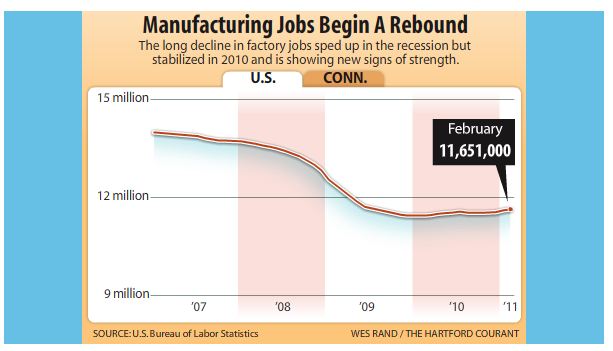
Manufacturing Jobs Begin A Rebound
Despite the slow overall recovery, the factory jobs picture in February was as strong as it’s been in any month since 1973.

It’s possible that January’s massive storms led to more hiring in February due to pent-up demand. But company managers say, and data show, that hiring is on the rise in the manufacturing sector.

Nationally, the Manufacturing Institute for Supply Management (ISM) report said 56 percent of factories were keeping employment level, and 35 percent added people to their staffs in February. Those kinds of readings have not been seen in 38 years.

U.S. Manufacturing Boom Stems Risk of Post-Quake Stock Panic

To contact the reporter on this story: David Wilson in New York at dwilson@bloomberg.net

“U.S. manufacturing is booming” and helps explain why stock investors shouldn’t panic over Japan’s nuclear disaster or the Middle East’s conflicts, according to Edward Yardeni, president and chief investment strategist at Yardeni Research Inc.

Growth has been “surprisingly robust” and may be accelerating, Yardeni wrote today in a report. He cited the Federal Reserve Bank of Philadelphia’s factory index for March, which showed the fastest expansion since 1984. The indicator for eastern Pennsylvania, southern New Jersey and Delaware climbed to 43.4 from 35.9 in February.

In February, the ISM index rose to 61.4, matching its highest level since 1983. Readings greater than 50 point to expansion. The indicator has risen for seven straight months.

“It is becoming increasingly obvious” that U.S. factories are taking part in a global manufacturing surge that includes countries such as Germany and South Korea, Yardeni wrote.

The growth is among a dozen reasons not to panic over what’s happening in Japan and the Mideast, the report said. Others include “super-normal” earnings growth, a rebound in employment, a pickup in takeovers and “extremely stimulative” fiscal and monetary policy.

Japan vs. Haiti: Quality Metal Fabrication & Construction Saves Lives

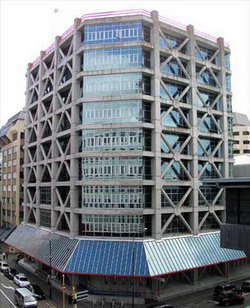
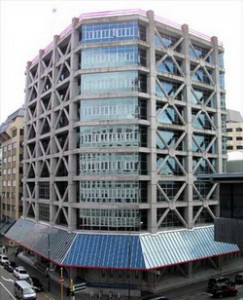
By any measure, the recent earthquakes and tsunami in Japan have been disastrous. Even so, it is amazing how many of the tall structures in Japan remained standing. Many more lives would have been lost if Japan’s infrastructure and building codes were less stringent.

To show the importance of quality construction and building codes, here are some interesting — and chilling — statistics to compare:

Haiti had a 7.0 earthquake on Jan. 12, 2010. Its epicenter struck near its capital, Port-au-Prince. Out of a total estimated population of 9,719,932, over 222,570 people were killed, 300,000 injured and 1.3 million were displaced.

That means that over 2% of Haiti’s population was KILLED and over 13% were homeless as a result of the 7.0 earthquake there last year. As regards the area where the damage was most severe, that comes to a death rate of 11.5 percent of the approximately two million people living in the immediate area of Port-au-Prince.

On March 11, 2011, Japan had an 8.9 magnitude earthquake 80 miles offshore, followed by a devastating tsunami, which rolled in at 600 mph. The March 11 earthquake was preceded by a series of large foreshocks over the previous two days, beginning on March 9th with a magnitude 7.2 event approximately 24 miles from the March 11 earthquake, and continuing with a further 3 earthquakes greater than magnitude 6 on the same day. The 8.9 magnitude earthquake was the worst in recorded history.

Japan’s death toll is currently around 7000, but it is far too early to tell. I can only imagine, in light of the devastation, that it could easily climb to 20,000 by the time these numbers are finalized.

Japan has a total population of 128.05 million.

Even if the current projected death toll from the recent earthquakes and tsunami more than double to 20,000, that would still keep it at only 1 fatality in 10,000 – a VERY far cry from Haiti’s recent earthquake disaster, which again claimed over 20 out of 1000 of its total population. If Japan’s death toll had equaled Haiti’s, in terms of percentages, then their death toll in terms of numbers would have been 2,156,000. That’s 2,555,000 or so lives that WEREN’T lost, that could have been, if conditions in Japan had matched those in Haiti.

The key difference between the infrastructure in the two countries can be summed up in two words: building codes.

It was observed that the vast majority of the tallest buildings in Japan’s urban areas stayed intact. Skyscrapers were seen to sway with the impact, but they stayed put. In fact, they were built to be able to sway that way. That’s part of what makes them so resilient to earthquakes.

Shorter buildings in Japan are built on tight coils, or springs, which decouples the buildings from the ground vibrations during an earthquake.

Haiti didn’t much care about building codes. Thousands upon thousands of people ended up being trapped in the rubble or displaced and homeless.

Japan has stringent building codes (the good news is, building codes in the US are on a similar par to Japan’s). This has made a huge difference in terms of the most recent natural disaster’s impact on that country, as opposed to the impact of the Haiti earthquake. This is not to make less of what actually has happened in Japan. But it really could have been a lot worse, if they hadn’t been this well prepared for it in terms of adhering to their building codes.

In fact, the vast majority of the destruction in Japan was due not to the earthquakes, but to the tsunami.

The estimated increase in construction costs for an earthquake-resistant structure that adheres to the strictest seismic codes is around 10%. Not bad, considering the amount of prevention available in this cure.

Steel framing and reinforcements are the most effective performers for earthquake resistant structures, provided that their connections are of a high quality. Metal is the top choice for builders when it comes to making a building earthquake resistant. Earthquake resistant buildings are constructed in a flexible mode, which means that in the event of an earthquake, they won’t break. They will just move.

Which brings us back full circle to the importance of quality metal fabrication machinery and construction. When you look at the amount of lives they truly can save, this manufacturing industry could be said to be the true unsung heroes of this piece.

-Anja Wulf

Manufacturing Output Rose In February

Manufacturing Output Rose In February.

The New York Times /AP (3/18, B3) reports that US manufacturing output rose in February for the sixth straight month in a row, gaining 0.4 percent, according to the Federal Reserve. “Manufacturers have increased production in 17 of the 21 months since the recession ended,” and “stronger factory activity has been an important factor supporting job growth” During February, “factories added 33,000 job.”

Bloomberg News (3/18, Willis) reports that February’s growth “followed a 0.9 percent January gain that was three times as large as initially estimated, Fed figures showed today.” Firms are “benefiting from overseas demand, business investment and inventory restocking that are fueling manufacturing.”

Industry Week (3/18) reports, “The production of durable goods advanced 0.9% in February, and gains were widespread across its major categories.” Motor vehicle production rose 4.2%, and “sizable gains also were recorded in February in wood products; nonmetallic mineral products; computer and electronic products; electrical equipment, appliances, and components; furniture and related products; and miscellaneous manufacturing.”

The “Real Time Economics” blog of the Wall Street Journal (3/17, Lahard) reports that while factories in general are seeing a low level of capacity utilization, textile mills, apparel makers, and producers of computer and peripheral equipment have seen a significant tightening of capacity, although for the first two it’s mostly due to a drop in US productive capacity.

Fed: Philadelphia Area Manufacturing Up.

According to the Philadelphia Inquirer (3/18, Schweizer), the Federal Reserve Bank of Philadelphia reported that, “riding a wave of new orders, manufacturers in the Philadelphia area ramped up production this month to the highest level in more than 27 years,” rising to 43.4 from 35.9 last month. “The strength was broad-based, the Philadelphia Fed said, with manufacturers’ shipments of finished products, unfilled orders, and labor conditions all at high levels.”

Bloomberg News (3/18, Willis) reports, “Rising exports to emerging economies such as China, along business investment and inventory rebuilding are generating bigger gains in factory production.” Industry Week (3/18) reports, “Increases in input prices continue to be widespread, and more firms have been reporting increases in prices for their manufactured goods in recent months. Most firms also indicated that they expect acceleration in production over the next quarter.”

According to the Philadelphia Business Journal (3/18, Kostelni), the indicators “pointed to an uptick in future production activity during the next quarter.”

As Copper Prices Rise, Manufacturers Switch To Aluminum.

The Wall Street Journal (3/18, Whittaker) reports that increasing copper prices have manufacturers turning to aluminum, as the difference in cost of the metals has reached the point that it is greater than the expense of retooling some manufacturing processes as well as the cost of the extra aluminum needed to conduct the same amount of electricity in copper. Wiring for cars and buildings, as well as evaporator and condensing coils for air conditioners and refrigeration are poised to make the switch.

From SME Daily Executive Briefing 3/18/2011

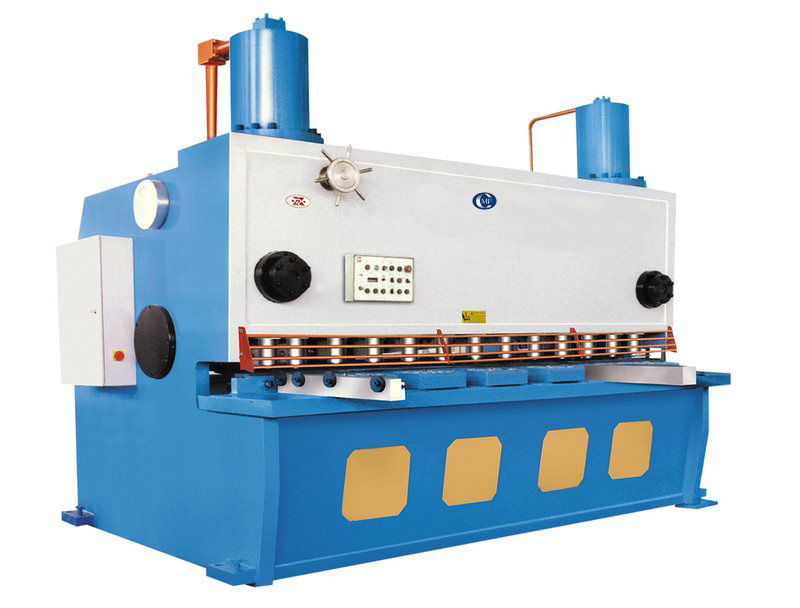
CMF CSS Swing Beam Shear

STANDARD EQUIPMENT

Maximum Line Voltage 220/440, 3PH/60HZ

  • Cut length by timer
  • Blade gap by Hand-wheel
  • ATOS Hydraulic solenoid valves
  • Shadow light
  • 38” squaring arm
  • Cutting counter
  • Single, inching, and continuous stroke
  • Mar-free hold-down pads
  • Ball transfers on the table
  • Full protection guard system

CONSTRUCTION

  1. Strong mono-block construction for minimum deflection.
  2. Hydraulic power unit is easily accessed under the bed of shear where noise level is reduced
  3. Swing beam construction

MAIN COMPONENTS

Ball bearing lead screw: Taiwanese HIWIN
Servo motor and drive: Japanese YASKWA
Straight line guide: Taiwanese HIWIN
Hydraulic system: German HOERBIGER
Seal ring: German FELETZ/Japanese VALQUA

TECHNICAL SPECIFICATIONS (click link below)

CMF CSS Swing Beam Shear Specifications

CMF CS Hydraulic Guillotine Shear Line

CMF CS Hydraulic Guillotine Shear

CMF CS2530 10' x 1" Hydraulic Guillotine Shear

FEATURES

  • All steel welded structure, vibration treatment for removal of internal stress.
  • Integrated hydraulic transmission system for reliability
  • Triple support rolling guide to eliminate gaps of support and enhance shearing quality
  • Power back gauge with manual fine tuning and digital or LCD readouts
  • Gap between shear blades adjusted by hand wheel which is quick and accurate
  • Rectangular blades with four cutting edges to prolong working life with adjustable shearing angle to reduce deformation of cut piece
  • Upper blade holder has inward tilting structure to facilitate material feed in and also enhance accuracy of work piece
  • Shadow light for miter cuts and other off square cutting
  • Options Pneumatic Sheet Support
  • Optional 6’, 8’, 10’ and 12’ Squaring Arms available
  • CNC Controls available

TECHNICAL SPECIFICATIONS (click link below)

CMF CS Hydraulic Guillotine Shear Specifications

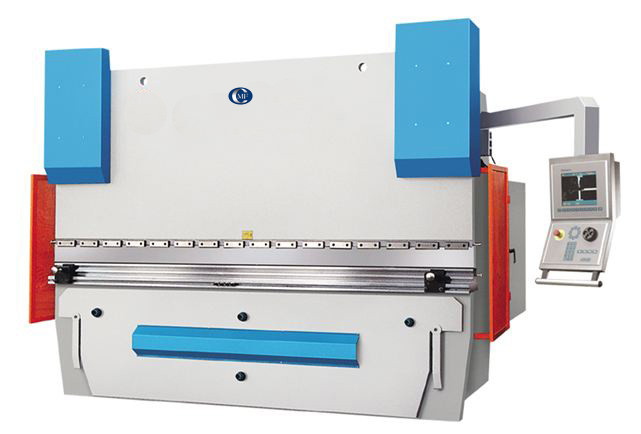
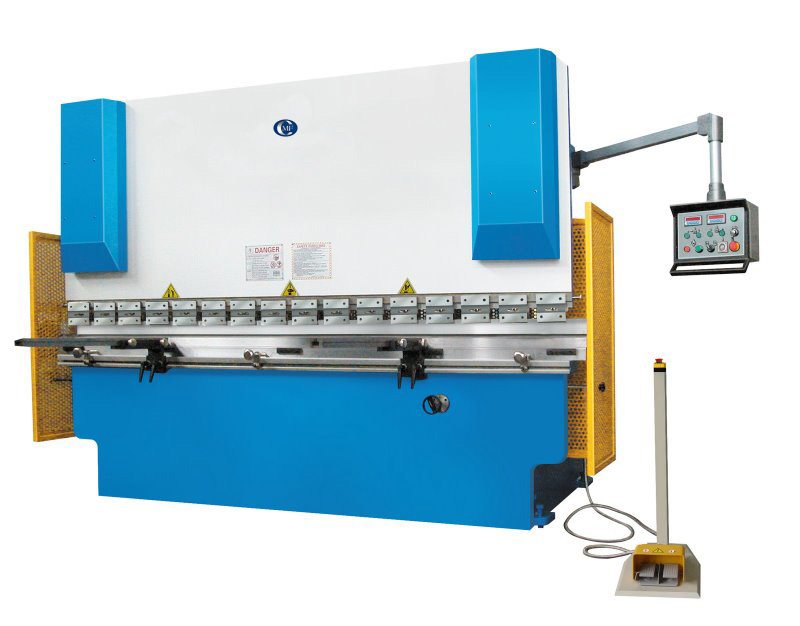
CMF CBCN Electro-Hydraulic Synchro NC Press Brake

CMF CBCN Electro-hydraulic Synchro NC Pressbrake

FEATURES

  • Electro-hydraulic proportional servo synchronization free point control within stoke range, repeatability of .001” and.008” parallelism.
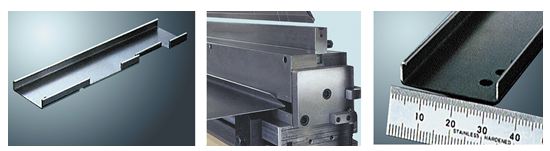
  • Bed is fitted with deflection compensation cylinders (above fig.) or upper punch fitted with deflection system. 250 ton and up is fitted with both systems.
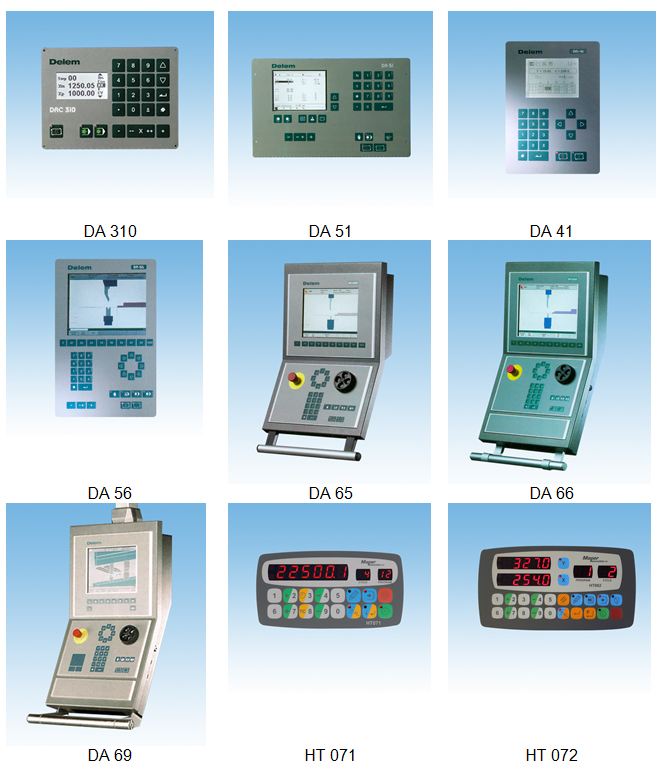
  • Fitted with Delem of Holland or Cyblec Co. exclusive computer system.
  • Very strong anti-deviation capability.
  • The ram (Y1 Y2), back gauge (X, R, Z) and master pressure controlled by computer.
  • Ball lead screw rolling guide rail are adopted to back gauge top to get high precision repeatability.
  • Optional digital controlled mechanical robot or flexible machining center for sheets with 7 axis and up

Multi-machine tandem pressbrakes

  • Single machine performance with two machine tandem.
  • When in tandem mode electric-hydraulic servo systems are adopted to provide sensitivity and reliability and high anti-deflection capability.
  • Optional single brake operation.

CMF CB Line of Press Brakes

CMF CB 100/3200 Press Brake

CMF CB 100/3200 Press Brake

FEATURES

  • All steel welded structure using vibrating treatment for removal of internal stress, with good rigidity and stability.
  • Torsion shaft controlled synchronization of mechanical limit stops.
  • Integrated hydraulic transmission system, large range of speed of the ram with stable and reliable performance.
  • Back gauge and ram have electrical adjustment for stoke with manual fine-tuning and digital readout.
  • For bending machines 250 tons and up, synchronization mechanism of mechanical or electrical hydraulic transmission is fitted to the bed with a deflection compensation system.
  • Tandem systems are available.

NC SYSTEM

NC System

TECHNICAL SPECIFICATIONS (click link below)

CMF CB Press Brake Specifications