Month: January 2011

My answer to Lorelai’s question

Metal fabrication and the machinery used in such could be considered manly, and for good reason. When I consider the machinery and process a quote by Tim Allen comes to mind.

“Argh Argh Argh”.

Those of you who are familiar with Tim The Tool Man Taylor understand that. Those of you who don’t…well…you need to pick up a copy of the show and broaden your horizons. Great stuff.

But even as I can relate to the Tool Man and consider myself a man’s man, I must admit something.

I’m a big fan of another show. Quite the fanatic actually.

The Gilmore Girls.

Yep, I admit it and am so confident in my manliness that I admit it with no reservations and with considerable pride.

Now that I got that off my chest, I can move forward with my point. You see the other night I was watching an episode and the main character Lorelai said something in jest that actually got me to thinking.

She said “What happened to all the anvils in the world”. Hmmm….. Interesting question if you think about it. She then goes on to talk about how you saw them all the time in old westerns, old west TV shows, and of course Looney Tunes as Wile E Coyote seemed to have an endless supply of them and went through them as if they were an everyday disposable.

So I turned to my good friend Google and started digging.

With the advent of welding technology, which we’ve covered before, anvils fell out of use as the primary tool for metal working, a tool that predates history actually. It might even predate humanity as chimpanzees have been seen using a log as an anvil and a stone as the striker to open hard to crack nuts.

Today they are only used for some custom one off work and are essential for farriers.

But I have a theory of where the anvils went.

In the air!!

I’m talking about anvil firing. Very interesting, anvil firing. It has been used as a source of celebration for many years, kind of like fireworks.

Here is the concept. One takes an anvil and turns it upside down. This is used as the base. The concave in the bottom of the anvil is filled with black powder (not gunpowder as it is to powerful). Then another anvil is place on top of it right side up as the “flier”. A wick is used, sparks fly, and the anvil is launched sometimes hundreds of feet in the air. It was commonplace in the southern United States and is actually approximated in the movie “Sweet Home Alabama”.

Although there are many variations today of the practice, the general concept is the same. This sounds like fun to me and thus proves my own manliness.

What’s more manly than blowing stuff up!!

3.2% GDP growth rate boosts hope for 2011

WASHINGTON —

The economy gained strength at the end of last year as Americans spent at the fastest pace in four years and U.S. companies sold more overseas. The growth is boosting hopes for a stronger 2011.

The Commerce Department reported Friday that growth rose to an annual rate of 3.2 percent in the October-December quarter. That’s an improvement from the 2.6 percent growth in the previous quarter. And it was the best quarterly showing since the start of last year.

The economy has now consistently picked up speed since hitting a rough path in the spring.

From the Associated Press
January 28, 2011, 5:47 a.m.

Companies’ Soaring Profits Offer Optimism For All US Manufacturing.

NEW YORK/CHICAGO (Reuters) – U.S. manufacturing companies posted higher-than-expected results, as sharply improved margins boosted profits amid strong industrial demand and growth in emerging markets.

Companies including Catepillar Inc., Tyco International Ltd and Eaton Group reported strong sales and earnings, and investors were looking ahead for signs the industrial rebound would begin to affect the wider economy and boost employment.

Catepillar provided an encouraging sign for U.S. jobs but also showed that employment remains one of the main ways companies can control profit margins.

The machinery maker, which slashed nearly 30,000 full-time and contract jobs worldwide during the recession, said it had rehired about 8,200 workers worldwide in 2010, and hired another 11,000 temporary contract workers, half in the United States.

“A lot of that driven by export demand, so that was an increase in employment,” Caterpillar’s head of investor relations, Mike DeWalt, said on a conference call. “But if you look at sales, sales went up quite a bit more than that.”

Caterpillar’s operating margins jumped from 2 percent a year ago to 10 percent in the fourth quarter. Other large industrial names also expanded margins.

Caterpillar shares were up 1.7 percent at $97.33, an all-time high for the industrial bellwether.

Caterpillar reported a stronger-than-expected quarterly profit, lifted by increased sales of its machines in Asia and Latin America and a sharp rebound in demand in North America, especially from mining customers. The company also forecast it would post a 2011 profit near $6.00 per share, which is above the market consensus.

ADDING JOBS

“So far so good,” said Oliver Pursche, president of Gary Goldberg Financial Services, about the earnings season for manufacturing companies. He added that corporate comments on jobs were one of the key factors he was listening for as an investor.

“The more they talk about hiring, the more comfortable we’re going to be with that company. If you’re hiring people, your business is growing.”

Eaton is likely to grow its workforce by a few percentage points this year as markets such as autos, aerospace and non-residential construction recover from recession, the diversified industrial company’s CEO said.

“You’ll see hiring here in the U.S. as well as around the world,” Sandy Cutler told Reuters.

Eaton’s quarterly profit beat expectations on a strong truck market and higher demand for its electrical systems. The maker of hydraulics, truck transmissions and other industrial products forecast record 2011 earnings, set a stock split and announced a 17 percent dividend increase.

Tyco’s quarterly earnings more than doubled, beating Wall Street expectations amid sharply higher profits at the conglomerate’s security business, which includes the former ADT Worldwide service.

Tyco, which said it was close to finalizing acquisitions worth around $500 million, also raised its full-year forecast. Its shares were up 0.8 percent at $45 in afternoon trading. It was one of many stocks trading near multiyear highs.

Industrial shares rose 24 percent last year, lagging only the consumer discretionary sector, according to Standard & Poor’s, which recommends investors stay “overweight” in industrials amid expectations of continued global expansion.

The sector has also outrun the broader stock market in 2011, and a correction could be imminent, S&P said.

As companies keyed to industrial demand continued a trend of beating Wall Street forecasts, investors took profits in some names, like Kennametal Inc. and Timken Co.

Tool maker Kennametal, considered a pure play on industrial production, raised its full-year forecast above Street estimates amid strong demand from industrial and transportation markets. Profit at Timken, maker of bearings and specialty steel, was helped by auto and truck production and an ability to push through higher prices.

Electrical and electronics products maker Hubbell Inc also beat, as did Harsco, which provides products to metals producers.

Conglomerate Danaher Corp. showed sharply higher profits in its industrial components and test-and-measurement segments. It affirmed 2011 earnings targets.

“We expect the global economy to continue to improve in 2011, lead by the emerging markets,” Danaher CEO Larry Culp said on the company’s conference call.

WIDESPREAD OPTIMISM

Optimism among manufacturing executives is widespread. Sixty-three percent are upbeat about U.S. economic prospects over the next 12 months, according to a quarterly survey by PricewaterhouseCoopers. That marked a 28-point increase over the prior quarter.

Still, fewer than half — 48 percent — plan to add employees over the next year, PwC found, partly reflecting concerns about taxes, regulation and soft demand.

Worries about corporate taxes, especially, may keep U.S. companies from significantly boosting capacity until the second half of 2011, said analyst Brian Langenberg of Langenberg & Co. U.S. consumers remain constrained by the housing market.

A reminder that not all is well on the housing front came from the No. 1 homebuilder, DR Horton Inc, which posted a wider-than-expected loss.

“Industrial production is increasing on a global basis,” Langenberg said. “(Manufacturers) need to increase capital spending.

“When do they have to boost capacity? Now. Where? Not necessarily in the U.S.”

(Reporting by Nick Zieminski and James B. Kelleher; Additional reporting by Scott Malone in Boston; Editing by John Wallace, Matthew Lewis, Phil Berlowitz)

By REUTERS
Published: January 27, 2011

Filed at 3:04 p.m. ET

Consumer Confidence Index hits 8-month high

WASHINGTON  — Consumer confidence hit an eight-month high in January. The increase suggests the rising spirits that fueled a holiday shopping boom are carrying over into the new year as people feel better about the job market.

The Conference Board said today its Consumer Confidence Index climbed to 60.6 this month from 53.3 in December.

Click HERE for YouTube video.

While confidence is still far from the 90 that signals a healthy consumer mindset, the January improvement was better than expected. Some economists said the big tax relief package Congress passed in late December may have helped.

“So much for a ho-hum January,” said Jennifer Lee, senior economist at BMO Capital Markets. “The signing of the stimulus bill and all that it is intended to bring is buoying sentiment.”

The $858 billion package extended the Bush-era tax relief at all income levels for two years, provided tax breaks for businesses and reduced Social Security payroll taxes by 2 percentage points this year. The Social Security reduction will mean an estimated $1,000 in additional after-tax income for the average family, according to White House estimates.

Other analysts suggested that the recent gains in the stock market and improving labor market conditions were trumping higher gasoline prices and falling home prices. The Standard & Poor’s/Case-Shiller 20-city index showed home prices falling in most of America’s largest cities and hitting their lowest point since the housing bust in eight markets.

“The recovery in stock prices and the beginnings of an improvement in the labor market are making people feel better about the economy,” said Ian Shepherdson, chief U.S. economist at High Frequency Economics.

The January confidence figure was the highest last May’s 62.7. At that time, consumer attitudes were improving as economic growth seemed to be taking off. However, the economy stalled in the summer, and so did confidence.

Confidence has been depressed by unemployment that surged during the country’s worst recession since the 1930s and has stayed stubbornly high even though the downturn ended in June 2009. Confidence has not been above 90 since the recession began in December 2007.

In the Conference Board survey, the percentage of people surveyed who felt jobs were hard to get fell slightly to 43.4 percent from 46 percent in December. The share who expected to see more jobs six months from now rose to 16 percent from 14.2 percent.

That finding supported a separate report Monday from the National Association for Business Economics that showed the number of firms expressing positive views on hiring had climbed to the highest level in 12 years.

While confidence has stayed weak since the recession ended in summer 2009, consumer spending has been picking up. During the 2010 holiday shopping season, sales increased at the fastest rate in six years.

Economists are hoping that consumer confidence will keep rising in 2011 as the economy improves and unemployment declines.

Employers added 1.1 million jobs for all of 2010, but the nation still has 7.2 million fewer jobs than it did in December 2007, when the recession began. Many economists expect the nation will create twice as many jobs this year as it did last year as economic growth picks up.

The Conference Board confidence index was based on answers to questions from a survey of 5,000 U.S. households taken through Jan. 18.

By Martin  Crutsinger Associated Press
Jan.25, 2011, 2:28PM

Industrial Economy Stronger Than Thought, Economists Say.

Under the headline “Industrial Economy Builds Fresh Strength,” the Wall Street Journal (1/21, Tita, Hagerty, subscription required) quotes Jefferies & Co. analyst Stephen Volkmann as saying, “The industrial economy is stronger than many people believe.” He added, “I think there are still some legs to this recovery just to get back to normal levels” in the wake of the recession. The Journal notes earnings reports from industrial companies have been largely positive, which is portrayed as a good sign for coming reports. CEO Don Washkewicz of Parker Hannifin, which doubled its year-on-year profit for the fiscal quarter, said, “Based on the way these orders are coming through, I think this [rebound] is going to be sustainable.” Rockwell Collins and Johnson Controls also reported strong results.

Click HERE for complete article (subscription required).

Rolling On The River

Here at C Marshall Metal Fabrication our conversations usually revolve around metal fabrication, plate rolls, angle rolls, ironworkers, and such. Just a hazard of the trade I guess.

But back in the day, I did my fair share of woodworking as well along with general construction etc.

One job in particular on a church built in 1790 comes to mind. And as one thing leads to another in my mind, I find a direct relation to plate rolls and shears.

Bear with me.

Back in the early 90’s I was working on a church in Pelham, NH. The original ceiling and graded floor were works of art actually when looked through the eyes of a craftsman.

The ceiling had caved in and damaged the floors and pews, which of course had to be removed and replaced.

Well, when we removed the oak flooring we discover the lateral joists were attached to two large 4 foot by 4 foot beams that ran the length of the church from front to back. Carved directly out of two large trees these beams were impressive enough. But when we removed the lateral cross-floor joists (as required by the inspector), I noticed that the joists were lain in notches carved perfectly in the beams.

When I say perfectly, I mean seamlessly perfect and completely flush with the top surface of the beam making a completely smooth surface for the oak floorboards to lay upon.

I was surrounded by circular saws, miter saws, bubble levels, power planers, etc. With all of those tools at my disposal I realized the work that would be involved to do what those men had done. And I would have had to use every one of those tools plugged into various outlets along the floor.

And I still probably wouldn’t have gotten it as perfect as what I was looking at.

Then I realized that what these men did, they did in 1790…and without the use of my “advanced technology”.

It humbled me and then broke my heart as I had to remove every one of those painstakingly placed joists.

But as I did, I noticed the nails. The hand made nails made by a “Nailer”.

A nailer was a man who would make nails by hand with the use of iron bars that were cut to the correct size for the nailer to work on. The men who made these bars were called Slitters as they crafted slits in the bars for the nailer to fashion the nails in.

Then around the 1590’s in England, the Slitting Mill was introduced.

Now, the slitting mill was basically two pairs of rolls (sounds familiar) that were turned by water wheels. Mill bars were flat iron bars that were passed through the roll after heated in a furnace to form a plate. See where I’m going with this? Then the cutters slit it into rods of various lengths to make the rods for the nailer.

I know I am leaving a bunch of details out, but I’m sure you are familiar with them. 

Bottom line is, the nails were made by hand until the early 19th century when manufactured cut nails, and eventually wire nails, were introduced in America, thus making extinct the lost art of the nailer.

I wonder if those slitters, nailers, and carpenters thought of themselves as artists like I do.

I wonder how many arts have been lost under the feet of advancing technology.

Hmmm…

Michael Graves

U.S. Factories Buck Decline

Sector Creating More Jobs Than It’s Cutting; ‘Shining Star’

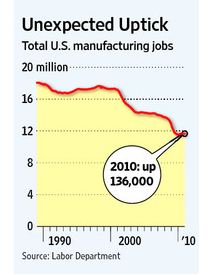
The economists’ projections for this year—calling for a gain of about 2.5%, or 330,000 manufacturing jobs—won’t come close to making up for the nearly six million lost since 1997. But manufacturing should be at least a modest contributor to total U.S. employment in the next couple of years, these economists say.

After a steep slump during the recession, manufacturing is “the shining star of this recovery,” says Thomas Runiewicz, an economist at IHS. He expects total U.S. manufacturing jobs this year to rise to about 12 million. Currently, manufacturing jobs account for about 9% of all U.S. nonfarm jobs; the average pay for those jobs is roughly $22 an hour, or nearly twice the average for service jobs, according to government data.

Despite the upbeat forecasts, job growth may remain modest because many companies are finding ways to increase production through greater efficiency and automation, without adding many workers. In the third quarter, U.S. manufacturing productivity increased as output rose 7.1% from a year earlier and hours worked grew just 3%. Conrad Winkler, a vice president at the consulting firm Booz & Co. who focuses on manufacturing, says manufacturers are being very cautious in their hiring, partly to avoid the risk of having to lay off people later on.

Manufacturing is going to be a significant source of job growth over the next decade,” says Mark Zandi, chief economist at Moody’s Analytics. He says U.S. manufacturers that survived the brutal 2008-09 recession are now very competitive, with much lower labor costs and debt burdens, and so can afford to expand. While they will keep building factories overseas to address demand in emerging markets, they also will invest in U.S. plants, Mr. Zandi says. He expects manufacturing job growth to average about 2% a year through 2015.

The job growth is expected as companies replace aging equipment, take advantage of government incentives, seek energy savings and rediscover that it makes sense to produce some products, such as ovens and construction machinery, at home rather than shipping them long distances. A new tax break, approved by Congress in December, is expected to further stimulate investment by letting companies deduct from taxable income 100% of certain types of investments in 2011.

By James R. Hagerty
Wall Street Journal – Business 1/19/2011
Write to
James R. Hagerty at bob.hagerty@wsj.com

Click HERE to read the complete article

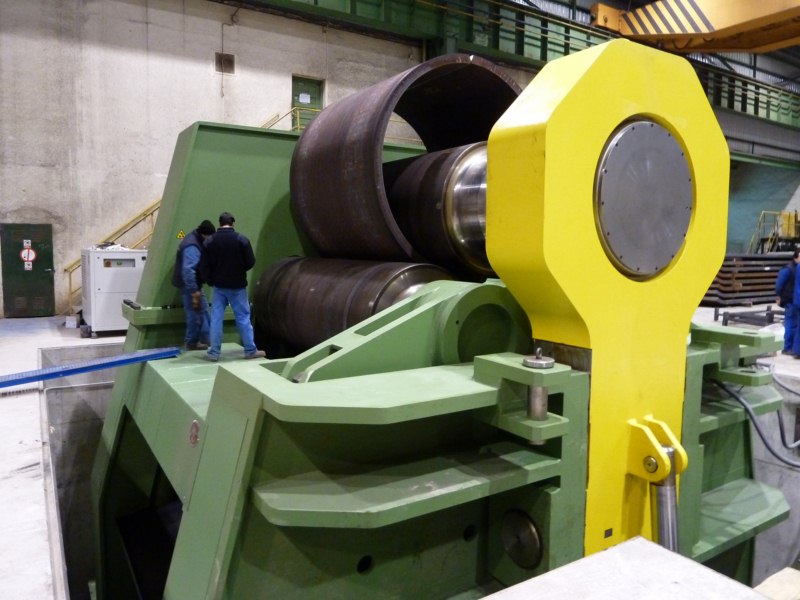
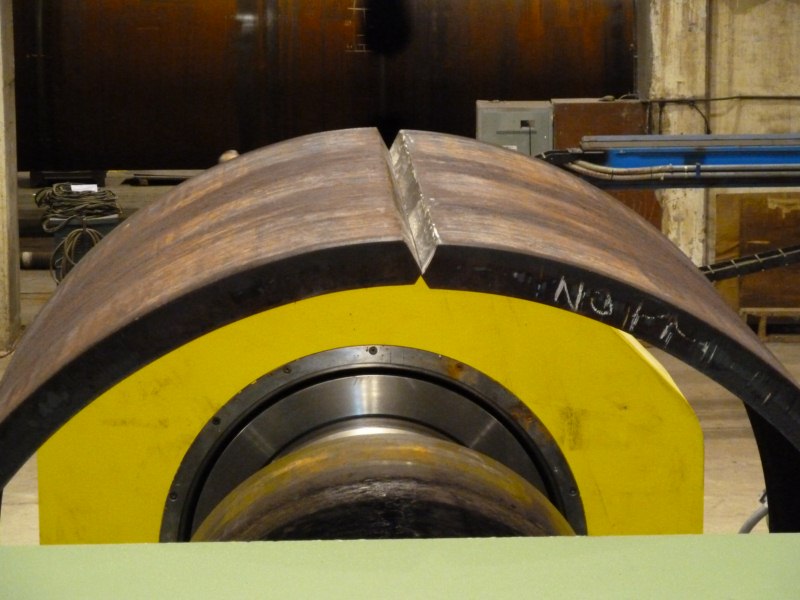
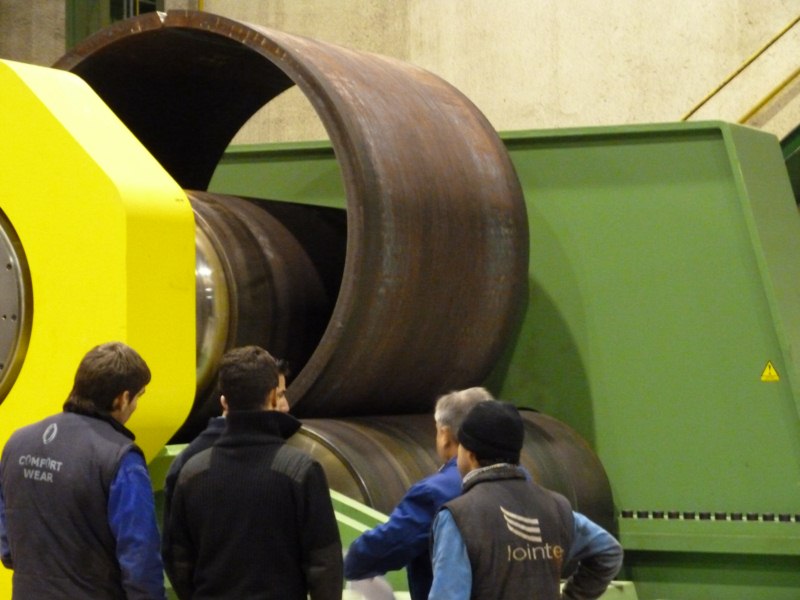
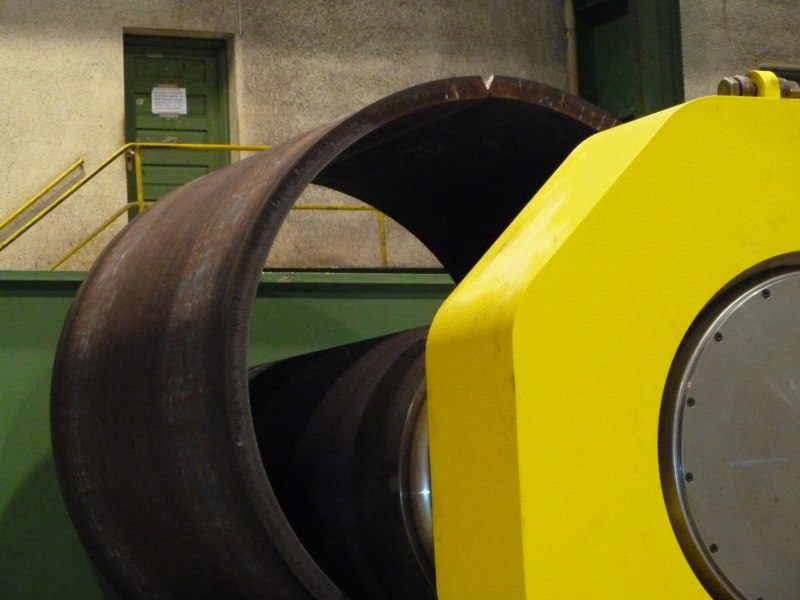
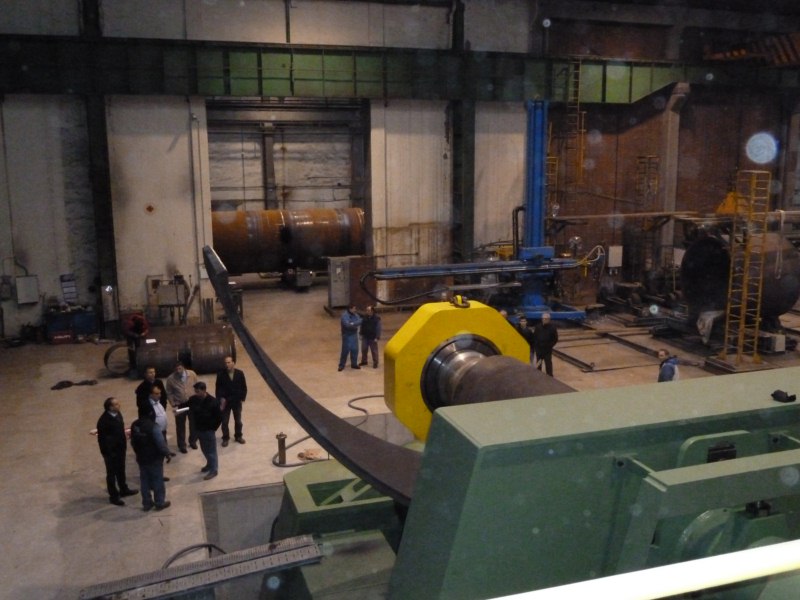
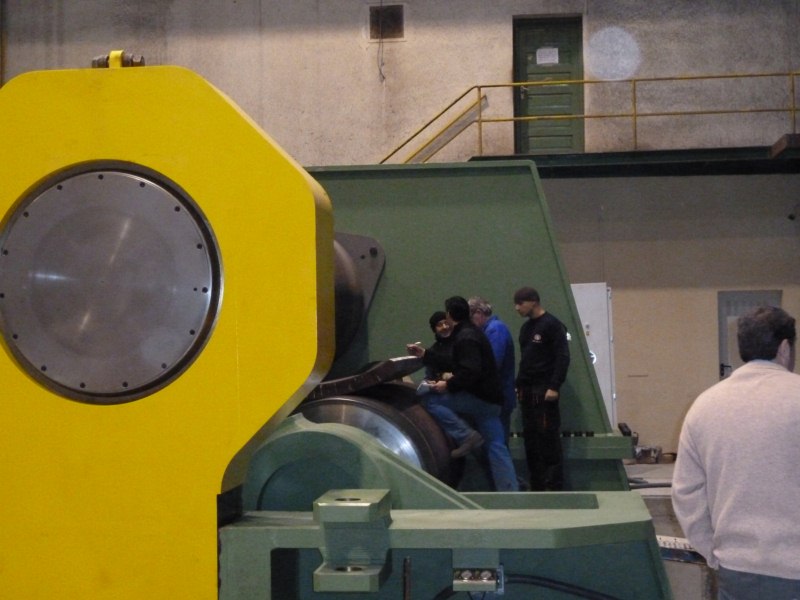
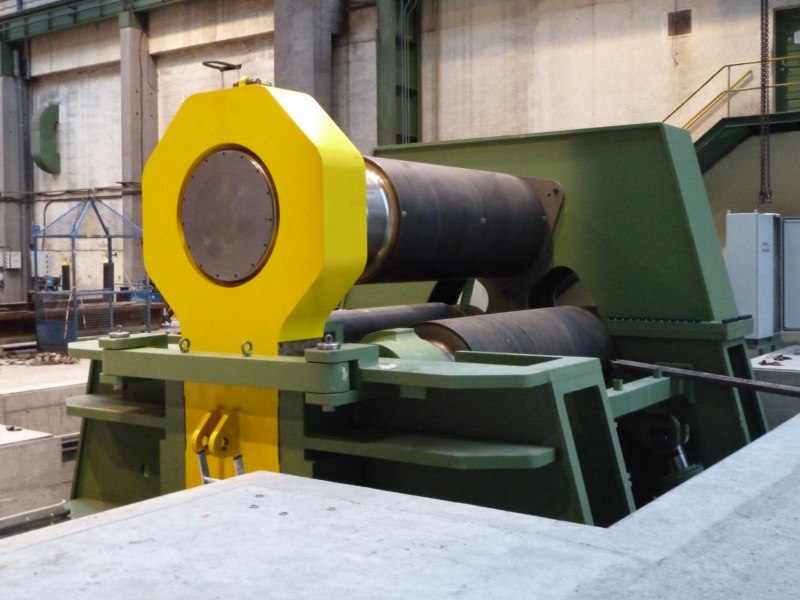
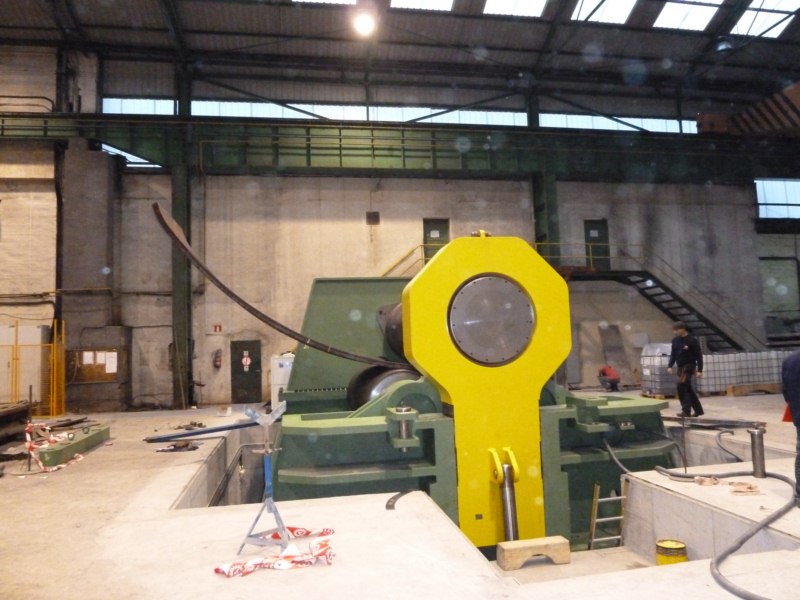
Pictures and video on MG 32520Z test-rolling 10′ plate

You don’t get to see this every day… MG32520Z is rolling a 10′ plate.

Here are some stats on this monster:

  • Weight: almost 400 tons / 800,000 lbs
  • Machine capacity: 250 mm / 10″, able to bend plate 250 mm / 10″ thick on total length of 3,200  mm / 126″.
  • Top roll diameter: 1,400 mm / 55″
  • Side rolls diameter: 1,200 mm / 47″
  • Total length of machine: 13,700 mm / 45′
  • Height: 7,700 mm / 25.3′
  • Width: 7,100 mm / 23.3′
  • Weight of top roll: 53 tons / 116,600 lbs
  • Side rolls (2): 47 tons each / 103,400 lbs
  • 17 trucks needed for the transport from Italy to Spain

Click HERE for video on test-rolling

War of the knobs!

C Marshall Fabrication Machinery, Inc., in no way condones war.

However, taking the silk purse from a sows ear approach to it, we can see some of the benefits of war if we look really hard, and usually not exactly where we might expect.

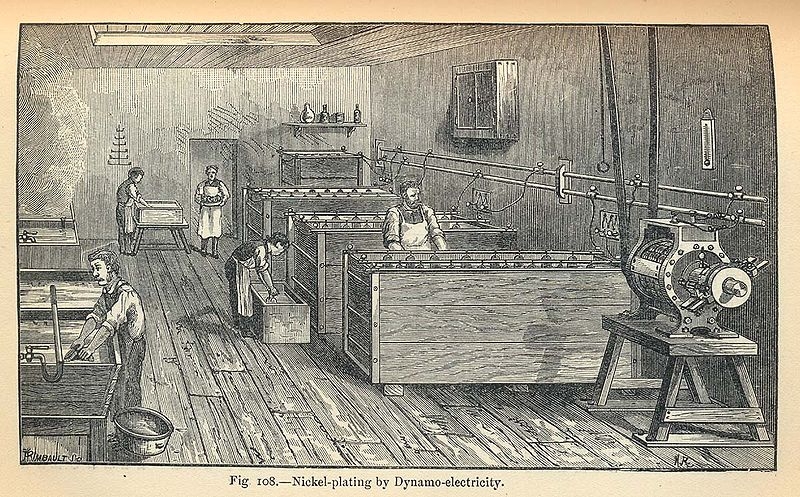
Take electroplating for example. In metal fabrication, electroplating is an everyday, taken for granted technology that is commonplace in our industry.

But being the inquisitive or bored mind writing this article (depending on who you talk to), I looked back and was surprised to find that the technology was discovered in 1805.

An inventive and industrious Italian chemist by the name of Luigi V Brugnatelli, using his colleague’s invention of the voltaic pile brought to being 5 years earlier, Luigi created the first environment of electrodeposition.

Unfortunately the technology was stomped on by the French Academy of Sciences for 30 years and it wasn’t until around 1839 that some British and Russian scientists independently started coming up with their own deposition processes very similar to Luigi’s.

They went forward to apply these sciences to copper electroplating of printing press plates.

Then in 1876 the first modern electroplating plant was put into production in Hamburg.

The process itself grew and made great advances in the late 19th century with the use of electric generators, but the industry itself was limited by the lack of demand.

Until the World Wars that is.

The process then went from manually operated to wooden tanks to full on automated equipment cranking out thousands of kilograms per hour of parts, armor, etc.

Had to keep up with the demand of the war machines.

This of course led to technology of plating metal on plastic by physicist Richard Feynman.

I personally think that this could be refined a bit more. It didn’t take any time at for the chrome to where off of my volume knob in my truck.

Let’s keep working it boys! Stereo knobs alone are reason enough without having to go to war for incentive!

Rebar Cutting and Bending on the Job

Save time and money.

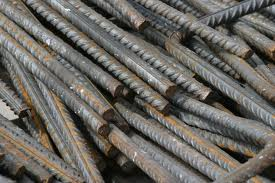
Steel used to reinforce concrete is known as rebar. It is usually made from carbon steel and the ridges on its surface are there to reinforce the anchoring into the concrete as well as help balancing the load between concrete and steel. Together, rebar and concrete, prevent the concrete from collapsing. A devastating example of incorrect usage of rebar is the 8.1 magnitude earthquake that struck Mexico City in 1985 leaving the capital in crumbles and killing thousands of people; most of the collapsed buildings’ rebar was either entirely too frail and thin to support the building—if the building had rebar at all.

Rebar is measured in fractions of 1/8 increments; it is available in different grades and ranges from #3 rebar up to #18 rebar. The grade designation is equal to the minimum yield strength of the bar. For example grade 40 rebar has minimum yield strength of 40 ksi, grade 60 has a minimum of 60 ksi, and grade 75 has a minimum of 75 ksi. The most common rebar used in concrete construction is grade 60; grade 75 is used in bridges and other heavy-duty construction and grade 40 can be found in low-stress concrete constructions such as sidewalks.

Picture to left: Building of Zampa-Memorial-Suspension-Bridge in California

Rebar comes most commonly in 20′  long sticks, thus there is a need for machines to cut and form them so they fit the purpose they will be used for. Concrete contractors do not have many choices when they have to cut or bend rebar, no matter the thickness of the bar:

Both options above will get the job done, however, as the critical thing in today’s competitive world is to get the job done fast – save time – and to get it done as cost effectively as possible – save money – it is recommendable to own your machines instead of outsourcing the work. For large, detailed jobs it makes more sense to order the specific rebar from a fabricator; however for smaller jobs, owning a cutter and/or bender gets the job done faster.

Using a rebar cutting/bending machine instead of a manual tool, in addition to making the work itself much easier, you will be able to cut 3 to 4 times more rebar which of course affects productivity positively. Another thing that speaks for the rebar/cutting machine is that they make it possible to make numerous identical pieces.

The entry-level price for rebar cutters and benders is not high. They run on electric power, either from wall sockets or generators. Also, the maintenance is easy, the blades last a long time and the machines are reliable and relatively easily to repair if needed.

As each job is unique it is very important to work with a good supplier in order to ensure that correct equipment is selected.

From the desk of Cary Marshall

Pictures below: using rebar in landscaping. Photos taken at the Getty Museum Gardens, Los Angeles, CA